
Personalized Dragon Books: Name, Avatar, or Your Child as the Rider?
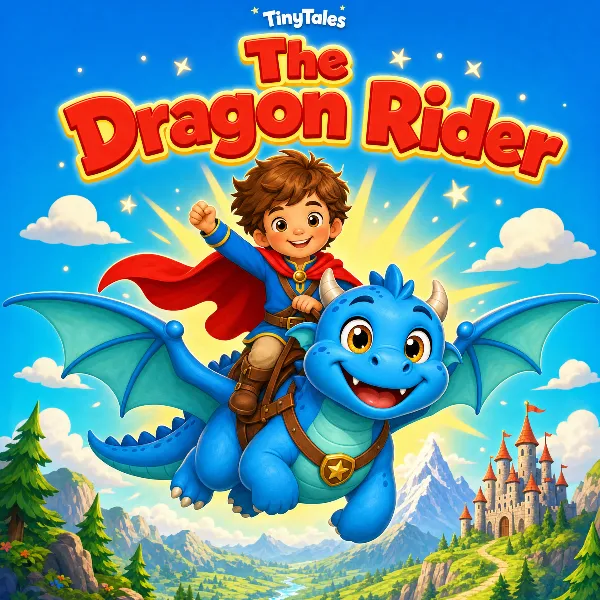
Few themes light up a small child like dragons. So a book where your child doesn't just read about a dragon but climbs onto its back and flies is a genuinely special gift. The catch is that "personalized dragon book" describes wildly different products. Two books wearing that exact label can range from a name dropped into pre-written text to a photo-realistic version of your child soaring over the mountains on a dragon's back.
This guide breaks down the three ways a dragon book actually gets personalized, what each one costs and trades off (with prices checked as of July 2026), and how to pick the right one for your child's age.
The three ways a dragon book gets "personalized"
1. Name-insertion (the classic)
The story is pre-written with a placeholder, and your child's name is dropped into the text — often cleverly, woven into the illustrations themselves. The pictured child is a fixed, generic character on every page.
A clear example is I See Me!'s My Royal Birthday Adventure, Dragon Edition, which threads the child's name through the art — across a towering birthday cake, the stars, and a royal invitation — in a magical-kingdom story featuring a dragon. It ships as a softcover or hardcover, 26 pages at 8.5 × 8.5 inches, printed in the USA, for $29.99 (as of July 2026).
Strengths: inexpensive, fast, and genuinely charming for toddlers who are thrilled just to see their name in print.
Limits: the illustrated child doesn't look like your child. For a pre-reader, the personalization can be nearly invisible until a grown-up points at the name.
2. Build-an-avatar
A step up: you assemble a cartoon character — skin tone, hair color and style — and that avatar rides through the dragon adventure. Letterfest's Personalized Dragon Book, for instance, lets you choose a girl or boy character from 3 skin tones and 5 hair colors, add the child's name, and print a message inside the front cover; it comes as a soft or hard cover for $39.95 (as of July 2026).
Strengths: the character finally resembles your child, and you keep the polished, consistent art of a professional illustrator.
Limits: it's still a character assembled from a menu. Two kids with the same hair and skin tone get essentially the same avatar — it captures a "type," not a specific face.
3. Photo-based and photo-real (the child in the story)
The most advanced tier uses an uploaded photo. Here the field itself splits in two:
- Photo-integrated AI illustration. Some services build an illustrated story around a photo you upload. Leo Books, for example, offers several personalized dragon titles — The Shy Dragon's First Flight, The Dragon Bakery, The Baby Dragon Babysitter and more — that fold in "your child's name, photo, and personality" for ages 3–10, with a free preview you only pay for once you approve it (as of July 2026).
- Photo-real cinematic face-swap. The most immersive version renders a photo-realistic version of your child directly into every illustration — real skin, real hair, real eyes — placed inside the world rather than pasted on top of it. The child isn't cartoonified; they genuinely appear to be there, on the dragon's back.
This last approach is what TinyTales uses in The Dragon Rider. (For a deeper look at how these techniques compare across every kind of book, see our guide to AI photo personalization vs. avatars vs. photo insertion.)
Strengths: the strongest sense that the book is truly about your child, because the hero looks like a cinematic photograph of them on every page.
Limits: it depends on a good source photo (clear, well-lit, front-facing), and photo-real rendering is more involved than dropping a name into text — part of why these books sit above a basic name-insertion paperback on price.
A quick way to think about it: name-insertion personalizes the text, avatars personalize an illustrated stand-in, and photo-real face-swap personalizes the hero's actual likeness.
Where each approach genuinely wins
None of these is "the bad one." They're built for different moments:
- Name-insertion wins on price and on toddler delight. If you want a charming, affordable keepsake for a two- or three-year-old who lights up at their own name, I See Me! and similar books are a lovely, low-cost choice.
- Avatars win when you want the hero to resemble your child but would rather not upload a photo at all — Letterfest's skin-tone and hair options give a recognizable stand-in with the safety and consistency of pure illustration.
- Photo-based books win on the "that's really me!" reaction. Leo Books' catalog breadth — nearly a dozen distinct dragon plots — is a real strength if you want variety in the story as well as the child.
TinyTales' edge sits in one specific corner of that last tier: a photo-real rider (not a cartoon) who is also the decision-maker in a branching story. That combination — likeness plus agency — is where a dragon book stops being a portrait and becomes an adventure.
Why "the rider, not the watcher" matters for a dragon book
For plenty of themes, a cartoon avatar is more than enough. Dragons raise the stakes for a specific reason: the entire fantasy is about riding one — trusting an enormous creature, holding on, steering through the sky. When the rider is unmistakably your child, the height, the wind, the courage all land harder, because the kid on the dragon's back is the kid on your lap.
That's also why the story matters as much as the face. A photo-real hero who just poses beside a dragon is a nice picture. A photo-real hero who has to decide something mid-flight — which path to take over the mountains, whether to turn back or press on — is an adventure the child actually lives. (We wrote more about why that agency matters in how personalized books teach kids decision-making and why choices matter in interactive books.)
How TinyTales does it: The Dragon Rider
In The Dragon Rider, your child becomes the actual rider — rendered from a single uploaded photo into every scene as a photo-realistic version of themselves, not a cartoon stand-in. Because it's a choose-your-own-adventure, the flight isn't on rails: the child makes the calls that shape how the story turns out, practicing small acts of courage and good judgment along the way.
Like every TinyTales title, it's available as a hardcover or paperback keepsake, with an optional digital copy and a matching coloring book. (Dragon-lovers who also can't get enough prehistoric adventure often pair it with our photo-real dinosaur book guide and The Dino Tamer.)
How to pick by age
- Ages 2–3. Simplicity and delight win. A name-insertion or avatar dragon book with big, friendly art and short text is perfect; the thrill is recognition, not plot.
- Ages 4–6. This is the sweet spot for a photo-real, choose-your-own-adventure dragon story. Kids this age love seeing themselves as the hero and are old enough to enjoy making choices and following a clear lesson about bravery or kindness.
- Ages 6–8. Early readers want a bit more story and stakes. Look for richer plot, real decisions, and a hero who looks like them — the personalization keeps a reluctant reader turning pages because the book is literally about them.
Whichever tier you choose, the honest test is the same: read the product page carefully and confirm exactly what gets personalized — the name, an illustrated stand-in, or your child's real likeness — so the book matches the reaction you're hoping for. For a wider cross-brand view, our best personalized children's books of 2026 hub lays the options side by side, and you can browse every TinyTales adventure in the full story catalog.
See your child in the story
Upload one photo and see The Dragon Rider with their real face in the pictures, before you pay.
Preview their book freeFrequently asked questions
Is there a personalized dragon book that uses my child's actual photo?
Yes, though approaches differ. Some books add a single inset photo beside a name-based story, others generate an AI-illustrated cartoon from a photo, and the most advanced render a photo-realistic version of your child into every scene via cinematic AI face-swap. TinyTales' The Dragon Rider uses the last approach, so the child genuinely appears as the rider.
Do personalized dragon books use a real photo or just the child's name?
Both exist, and 'personalized' covers a wide range. Name-insertion books (like I See Me!'s Dragon Edition of My Royal Birthday Adventure) weave the child's name through the art; avatar books (like Letterfest's dragon book) let you pick skin tone and hair; photo-based books (like Leo Books' dragon stories) upload a photo. Check exactly what changes before buying.
What age are personalized dragon books best for?
Roughly ages 2 to 8. Toddlers love seeing their name and face; preschoolers (4–6) enjoy a dragon adventure with choices and a clear lesson; early readers (6–8) want a bit more plot and stakes. Match the reading level and page count to the child.
Can my child actually be the dragon rider, not just watch from the side?
With photo-real personalization, yes — the child appears as the main character in every illustration rather than as a generic cartoon. In TinyTales' The Dragon Rider, the child is also the decision-maker: it's a choose-your-own-adventure, so they choose how the flight unfolds.
Are personalized dragon books good gifts?
They're among the more memorable gifts for a dragon-obsessed child because the book is literally about them. They work especially well for birthdays and holidays, where the keepsake value matters as much as the story.